Why Location Matters More Than Ever
Finding a space, you can call your own is about more than square footage, interiors and amenities. It is also about how simply and with ease you can get to work, access essential services and most importantly spend time with family. In a growing city like Kochi, connectivity has become an crucial consideration for homebuyers and property investors alike.
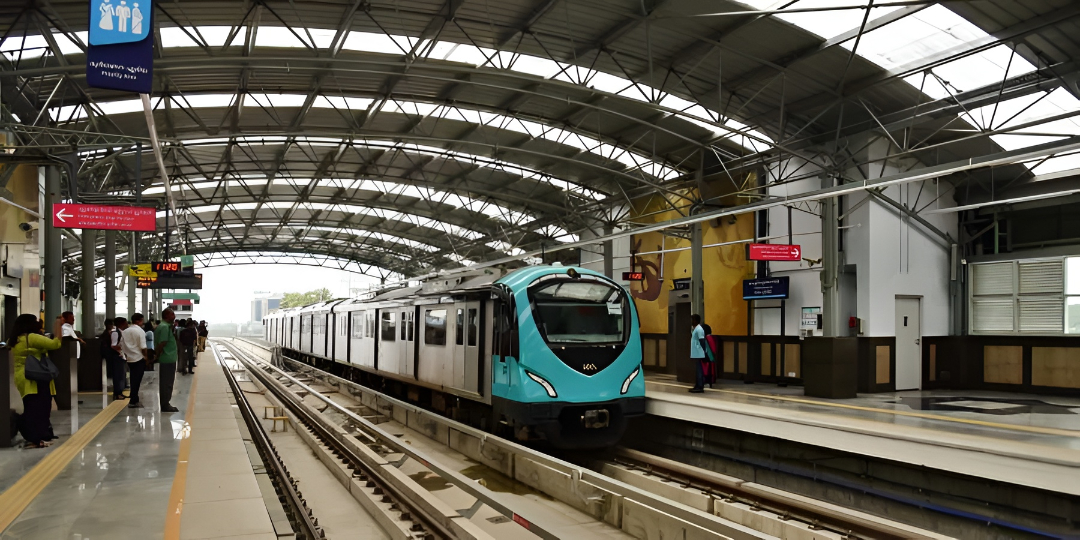
This is one reason Flats near metro station locations are gaining more attention in 2026. With established metro connectivity, expanding employment hubs and growing residential demand, well-connected neighbourhoods can bring in practical advantages for homeowners and long-term investors.
Kochi’s changing transport network is mainly relevant to people working in IT, healthcare, education and business. Especially places such as Edappally, Elamakkara, Vyttila and Kakkanad each offer seperate accessibility advantages, making it important and easy to assess the location of a property in relation to your everyday travel needs.
For buyers exploring Premium Apartments in Kochi, the right place can contribute to a more convenient lifestyle today and support the property’s long-term appeal.
1. Why Flats Near Metro Station Locations Matter in 2026
City commuting can impact where people choose to live. When travelling to work involves unpredictable traffic, fuel expenses and long periods on the road, residents increasingly value reliable alternatives.
Predictable commuting in a traffic-heavy city
Kochi’s road network has connections to major residential and commercial areas, but journey and commute times can vary considerably during peak hours. Traffic mostly focus on busy junctions and arterial roads can make daily journeys difficult to plan.
However, Metro travel offers a different experience. Once passengers reach a station, their journey along the operating metro corridor is less affected by road congestion. This predictability can be valuable to professionals with fixed working hours, students and families who travel regularly.
Living close to an accessible station can also reduce the need for daily vehicle use. However, the actual convenience depends on walking distance, feeder transport, station access and the location of the workplace.
Everyday convenience beyond the office
A well-connected home can simplify more than the morning commute. Residents may find it easier to reach commercial districts, shopping destinations, educational institutions and other parts of the city.
When analysing Flats near metro station locations, consider:
- The real walking or driving distance to the nearest operational station.
- The availability of safe pedestrian routes and street lighting.
- Access to buses, autorickshaws and other feeder transport.
- The time taken to commute to workplaces, schools, hospitals and supermarkets.
- The consistency and reliability of your usual travel route.
A property that blends fine transport access with a good residential environment can provide a stronger everyday living experience.
2. Kochi Metro Phase 2 Pink Line: A New Connectivity
Opportunity
Kochi Metro’s expansion towards Kakkanad is a crucial infrastructure development for the city’s residential property market.
According to Kochi Metro Rail Limited, Phase II is an around 11.2-kilometre corridor with 11 stations, connecting the JLN Stadium area with Kakkanad and employment destinations including Infopark and SmartCity. The planned is also serving locations around the Cochin Special Economic Zone (CSEZ), KINFRA and other important institutions.
The Kochi Metro Phase 2 Pink Line is therefore relevant to professionals who currently depend on road transport to reach the city’s IT corridor
How the Pink Line could influence housing demand
Better public transport can make chosen residential neighbourhoods more accessible to people working in major employment hubs. This may expand the range of locations that commuters consider when choosing a home.
Potential benefits include:
- Greater commuting flexibility: More options for reaching workplaces and tying
transport services. - Increased residential interest: Areas with convenient access to employment hubs may attract more interesting residents.
- Potential rental demand: Professionals may consider homes that help simplify their daily journey.
- Long-term location appeal: Improved accessibility can become one of several
factors supporting buyer interest.
These benefits are not automatic. Property prices and rental demand also depend on supply, apartment quality, neighbourhood infrastructure, maintenance costs and wider economic conditions.
Importantly, a planned metro corridor should not be confused with an operational service. Buyers considering property near future stations should verify the latest construction and commissioning status, the proposed station location and the realistic distance from the property.
3. Can Metro Connectivity Increase Property
Appreciation?
Accessibilty can impact real estate demand as it affects how easily people can access work and other day-to-day services. When a residential area becomes more convenient, it may attract additional homebuyers and tenants.
However, proximity to a metro station does not guarantee property appreciation. The end result depends on the wider market, the property’s purchase price, the stage of infrastructure development and the quality of the surrounding neighbourhood.
The relationship between accessibility and property value
Let’s consider two apartments with comparable configurations and amenities. One offers easy access to public transport, workplaces and essential services, while the other requires a longer and less predictable commute.
For some buyers and tenants, the first property may be more attractive. If this preference changes into sustained demand, it can support the property’s marketability.
The choice of this effect varies by location. An apartment close to a station but surrounded by poor roads, limited amenities or an unsuitable residential environment may not perform as well as expected.
What about the 15–20% rental premium?
A 15–20% rental premium is often cited in discussions about properties near transport infrastructure. This should not be allowed as a verified or universal benchmark for Kochi. Establishing whether such a better exists requires comparable rental data for similar apartments in the same locality, this can bring in differences in age, furnishing, amenities and access.
For investors, it is more useful to compare actual rents for similar properties, estimate vacancy periods and calculate rental yield using the full acquisition cost.
Gross rental yield = Annual rental income ÷ Total property acquisition cost × 100
For instance, an apartment bought for ₹1 crore and rented for ₹30,000 per month would generate ₹3.6 lakh in annual rent, equivalent to a gross rental yield of 3.6%. This calculation excludes maintenance, taxes, vacancies, financing and other expenses.
Metro connectivity may strengthen rental appeal, but reality can bring in calculations that are essential before making an investment decision.
4. Flats Near Metro Station vs. Road-Dependent Locations
Both metro-connected and road-dependent neighbourhoods can be suitable places to live. The better option depends on the resident’s workplace, lifestyle and preferred mode of transport.
| Factor | Metro-accessible location | Road-dependent location |
|---|---|---|
| Daily commute | Can bring more real time travel on operational metro routes | Travel time may vary with traffic |
| Transport expenses | May lessen fuel and parking expenses for regular metro users | Greater reliance on personal vehicles may increase costs |
| Workplace access | Particularly accurate when workplaces are connected to the metro network | Convenient when workplaces have direct road access |
| Rental appeal | May bring in tenants who value public transport | May attract tenants who prioritise road access or quieter surroundings |
| Long-term value | Depends on demand, accessibility and neighbourhood quality | Depends on comparable market and location fundamentals |
A practical commute comparison
The following table illustrates the kinds of journeys buyers should compare. These are
qualitative comparisons, not measured travel times or guarantees.
| Journey | By road | By metro |
|---|---|---|
| Home to a close by operational station | Short feeder journey or walk, where practical | Not applicable before reaching the station |
| Journey along an operating metro corridor | Open to road conditions | Less exposed to road congestion |
| Home to an office near Infopark | Depends on route and traffic | Depends on operational stations, transfers and last-mile access |
| Door-to-door commute | Includes traffic and parking considerations | Includes access to the station, waiting, transfers and the final leg |
Before purchasing, test the journey at your actual commuting hours. A metro journey may be predictable once you are on the train, but the entire door-to-door trip still matters.
5. Choosing Flats Near Infopark and Other Employment
Hubs
For professionals working in Kakkanad and the surrounding IT corridor, proximity to the workplace is an important factor in choosing a home.
The demand for Flats near infopark can be taken by work schedules, family requirements, rental budgets and access to transport. With the proposed Phase II corridor intended to connect central Kochi with Kakkanad, Infopark and SmartCity, connectivity is an important factor to monitor when assessing residential options.
Look beyond the distance on a map
A property that appears close to a workplace may still involve a difficult commute because of junctions, road access or last-mile travel. Similarly, an apartment farther away may offer a more convenient combination of public transport, road connectivity and everyday amenities.
Homebuyers should evaluate:
- The actual route between the apartment and the workplace.
- Access to operational metro stations and proposed future stations.
- Public transport options during early and late working hours.
- Nearby healthcare, schools, supermarkets and recreational facilities.
- The neighbourhood’s residential character, noise levels and road conditions.
The aim is to find a home that balances convenience, comfort and financial practicality rather than choosing a location based on a single infrastructure announcement.
6. Trinity Accord and Trinity UpTown: Two Kochi
Locations to Explore
Trinity Builders offers residential options in different parts of Kochi. Trinity Accord in
Elamakkara and Trinity UpTown in Vyttila are worth considering for buyers comparing
established neighbourhoods, road connectivity and access to the city’s transport network
Trinity Accord, Elamakkara–Edappally
Trinity Accord is a ready-to-move residential project in Elamakkara, near Edappally. The project offers spacious 3 BHK apartments and is an option for buyers looking for an established residential setting in this part of Kochi.
Trinity Accord is a ready-to-move residential project in Elamakkara, near Edappally. The project offers spacious 3 BHK apartments and is an option for buyers looking for an established residential setting in this part of Kochi.
For families, looking for a ready apartment can also offer the advantage of inspecting the completed property and understanding the surrounding neighbourhood before making a purchase decision.
Trinity UpTown, Vyttila
7. Why Builder Credibility and Compliance Matter
Location is crucial, but it is only one part of a property purchase. Buyers should also examine the developer’s track record, project documentation, construction quality and regulatory compliance.
Trinity Builders presents a portfolio of residential projects across Kochi, including completed homes and developments in progress. Its experience of more than 21 years is part of the company’s stated track record.
Before purchasing any apartment, buyers should independently verify the relevant Kerala Real Estate Regulatory Authority (K-RERA) registration, approved plans, possession terms and applicable project disclosures.
A useful homebuyer checklist includes:
- Verify the project’s K-RERA registration and current status.
- Review the sale agreement, payment schedule and possession conditions.
- Check the title documents and applicable approvals with qualified professionals.
- Understand maintenance charges, parking arrangements and association
responsibilities. - Inspect the apartment, common areas and available amenities.
- Confirm the actual distance to transport facilities and essential services.
Regulatory registration is an important safeguard, but it does not replace independent legal and financial due diligence.
Conclusion: Make Connectivity Part of Your Homebuying Decision
Kochi’s ever changing transport network is creating new considerations for homebuyers and property investors. Established metro services and the proposed Phase II Pink Line may improve accessibility for selected neighbourhoods, particularly around major employment destinations. Yet the best home buyin decision requires more than choosing a location near a metro station. Buyers should assess current connectivity, future infrastructure timelines, realistic rental demand, neighbourhood amenities and the developer’s documentation before committing
Author: Arjun nath, Real Estate Analyst,
Published/Last Updated: 24-10-26