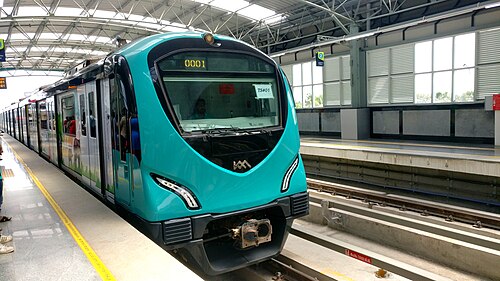
Kochi’s eastern rise corridor is entering a new part of infrastructure based change with proposed Kochi Metro Phase 2 Pink Line. Pushing forth connectivity from JLN Stadium to Infopark Phase 2, the corridor is hoping to restructure commuting patterns, influence residential demand, and create new real estate growth clusters across Kakkanad.
For homebuyers, investors, and IT professionals, understanding the station-level impact of the Pink Line is critical. Real estate appreciation around metro corridors is not often uniform. On the other hand, value increase tends to target around specific transit nodes where accessibility, job oppurtunities, and residential supply intersect.
This report examines the infrastructure blueprint of the corridor, identifies high-potential residential micro-markets, and explains how rental and capital values may change within metro catchment zones.
The Infrastructure Blueprint of the 11.2 km Pink Line Corridor
The Kochi Metro Phase 2 Pink Line is created to build east-west connectivity between central Kochi and the city’s largest IT employment hub. The proposed 11.2 km corridor will connect JLN Stadium Metro Station to Infopark Phase 2 through key residential and commercial zones in Kakkanad.
The corridor is expected to significantly reduce travel times for professionals working in Infopark, SmartCity Kochi, KINFRA Hi-Tech Park, and other technology clusters. The crucial importance of the corridor stems from its ability to connect major employment generators with established residential neighborhoods.
The crucial areas expected to benefit include:
- Infopark Kochi
- SmartCity Kochi
- KINFRA Hi-Tech Park
- Civil Station Kakkanad
- Rajagiri Valley
- Sunrise Hospital Kakkanad
- Kerala Real Estate Regulatory Authority (K-RERA) registered residential projects
The transit corridor effectively integrates employment, housing, and public infrastructure into a single mobility network.
Why Metro Infrastructure Directly Influences Property Values
Metro connectivity can ease accessibility, lessen travel uncertainty, and go on to build the attractiveness of surrounding residential locations. Properties located within walking distance of stations can commonly experience stronger demand than those that support solely on private vehicles.
Real estate analysts often analyse transit influence using the following relationship:
Property Accessibility Score ↑ = Travel Time ↓ + Connectivity ↑ + Employment Access ↑
As commuting efficiency improves, buyer demand and rental demand tend to rise.
Studies across Indian metro cities including Bengaluru, Hyderabad, Chennai, and Delhi-NCR have demonstrated that transit-oriented residential pockets outperform comparable non-transit locations over long investment cycles.
Micro-Market Micro-Analysis: Top Stations Poised for Capital Appreciation
Capital appreciation around the Pink Line is unlikely to occur in a strategic form. Certain stations possess stronger fundamentals due to existing residential demand, infrastructure concentration, and employment proximity.The following locations currently appear best positioned for long-term appreciation.
Palachuvadu: The Emerging Residential Sweet Spot
Palachuvadu sits between major residential communities and the IT corridor, making it one of the most strategically positioned stations on the route.
The area benefits from:
- Straight access to Infopark
- Connectivity to Vazhakkala and Thrikkakara
- Growing apartment inventory
- Established social infrastructure
Key nearby entities include:
- Rajagiri School of Engineering & Technology
- Rajagiri Hospital
- SmartCity Kochi
Because Palachuvadu already brings IT professionals, metro access could add to this rising housing demand.
Vazhakkala: Urban Convenience Meets Transit Access
Vazhakkala is one of the most sensible residential and commercial locations along the corridor. The area blends apartment communities, educational institutions, retail centers, and healthcare facilities.
Major nearby entities include:
- Sunrise Hospital Kakkanad
- Bhavans Adarsha Vidyalaya
- Oberon Mall corridor access
Vazhakkala’s advantage is all about balanced live-work environment. Metro connectivity could steadily grow its appeal among professionals seeking shorter commute times without sacrificing urban convenience.
Kakkanad Junction: Administrative and Commercial Core
Kakkanad Junction functions as the administrative heart of Ernakulam district.
The location hosts:
- Civil Station Kakkanad
- District administrative offices
- Commercial establishments
- Educational institutions
The concentration of government and private sector activity creates year-round demand for residential accommodation. Properties around Kakkanad Junction may aid from both commuter demand and commercial spillover effects.
KINFRA: The Long-Term Growth Candidate
KINFRA station is all about being one of the corridor’s most interesting long-term investment opportunities.
The surrounding region benefits from:
- Industrial development
- Technology parks
- Future commercial expansion
- Availability of development land
Historically, infrastructure-driven growth tends to favor emerging employment corridors where land supply still exists. As KINFRA expands its industrial and technology footprint, residential demand is expected to follow.
Project Yield Shift: Projected Rental Premium Swings for Walkable Properties
Properties that are within walking distance of metro stations generally often demand stronger rental pays because they lessen dependence on private transportation.
Most urban transit studies analyse a walkable catchment zone as properties located within approximately 500 meters of a station.
Understanding the 500-Meter Rule
The 500-meter radius represents a quite pleasant walking distance for daily commuters.
Properties within this zone often experience
- Faster tenant acquisition
- Lower vacancy rates
- Higher rental retention
- Better resale liquidity
The relationship can be expressed as:
Rental Demand = Employment Access + Transit Convenience + Walkability
As metro accessibility improves, tenant preference typically changes toward homes located within this walkable radius.
Why IT Professionals Drive Metro-Led Rental Demand
The Pink Line’s makes a great impact from the thousands of professionals working across the Kakkanad technology ecosystem.
Major employment hubs include:
- Infopark Kochi
- SmartCity Kochi
- Cochin Special Economic Zone (CSEZ)
- KINFRA Hi-Tech Park
For employees commuting daily, even a 20-minute reduction in travel time can significantly affect housing decisions.
This creates stronger demand for:
- Premium apartments
- Mid-segment residential projects
- Rental housing
- Compact family homes
Developers with varied projects located near proposed metro stations are therefore likely to benefit from stronger end-user demand compared to purely speculative investment demand
The Bigger Picture: Transit-Oriented Development in Kakkanad
Commute-basd development is based on urban growth concentrated around major public transportation corridors. Globally, cities use metro infrastructure to encourage denser residential development, reduce traffic congestion, and improve economic productivity
Kakkanad already possesses many characteristics required for successful transit-oriented growth:
- Large employment base
- Expanding residential inventory
- Educational institutions
- Healthcare infrastructure
- Government administrative functions
The addition of the Pink Line can build these fundamentals and could accelerate the area’s evolution into Kochi’s most important integrated urban district
Conclusion
The Kochi Metro Phase 2 Pink Line is more than a transportation project. It represents a structural shift in how residents, employees, and investors interact with the Kakkanad real estate market.
Among the proposed stations, Palachuvadu, Vazhakkala, Kakkanad Junction, KINFRA, and Infopark Phase 2 appear particularly well positioned for future growth. While capital
appreciation may take time to fully materialize, improved connectivity, stronger rental demand, and enhanced accessibility create compelling long-term fundamentals.
For buyers evaluating residential investments in Kakkanad, station-level analysis will likely become increasingly important as the metro corridor progresses toward implementation.
FAQs
Frequently asked questions about Kochi Metro Phase 2, investment potential, and the impact of improved connectivity on residential property values in Kakkanad.
Which Pink Line station may have the highest investment potential?
Infopark Phase 2, Palachuvadu, and KINFRA are most often seen as growth locations due to greater employment rates and future growth potential.
What is the ideal distance from a metro station for residential investment?
Properties that are around a 500-meter walking radius often benefit the most from transit accessibility and stronger rental demand.
Will Kochi Metro Phase 2 affect apartment rental values in Kakkanad?
Yes. Improved accessibility to major employment hubs such as Infopark Kochi and SmartCity Kochi is expected to increase rental demand in nearby residential pockets.